BUILDING RESILIENCE
Developing strength, clarity, and long-term psychological stability
Resilience isn't a personality trait. It isn't something you either have or don't. It's a set of habits, principles, and small daily decisions built deliberately over time. Men in this situation can develop genuine, durable resilience — and many do, often becoming stronger versions of themselves than they were before.

What resilience actually is
Resilience is often misunderstood as toughness — gritting your teeth, pushing through, never showing weakness. That's not it.
Genuine resilience is the capacity to be knocked down and to get back up. To feel things fully and not be ruled by them. To act with steadiness when everything around you is in flux. To carry weight that would crush an unprepared man — and to keep walking.
It's built. Not given. And it's built through the long, undramatic work of consistent practice over time.
The "gaze upward" principle
Jordan Peterson talks about the difference between living through trauma and being dragged down by it. Trauma is something that happens. Hell is somewhere you can spiral into if you don't keep your gaze raised.
The principle is simple: don't look down. Even if you're only looking a few degrees upward. Even if the world doesn't feel hopeful. Even if everything tells you it's pointless. Just don't let yourself fall into the downward pull. Keep your eyes raised — toward purpose, toward responsibility, toward the man you want to be — and keep going.
This isn't denial. It's discipline.
Antifragility — Nassim Taleb's concept
Some things break under stress. Some things tolerate stress without breaking. A rare few things actually grow stronger because of stress. Taleb calls this last category antifragile.
Human beings can be antifragile. The pressure of adversity, properly engaged with, can produce more capable, more clear-sighted, more substantial men. Not always. Not automatically. But it can.
Building resilience is in part about learning to engage with adversity in a way that makes you stronger rather than weaker. The same pressures that destroy one man build another. The difference is often in how the pressure is met.
Viktor Frankl and meaning
Viktor Frankl, the psychiatrist and Holocaust survivor, wrote that "Those who have a 'why' to live can bear with almost any 'how'."
This is one of the most important principles for men in your situation. The "how" — what's happening to you — is often outside your control. The "why" — the meaning you find or create — is yours.
Purpose carries you through what raw willpower can't. It might be your children. Your work. Building something. Helping others walk the road. Being the man you respect when you look in the mirror. The specific "why" varies. What matters is having one.
Direction over speed
Recovery and resilience are not fast. There's no breakthrough moment. There's no point at which you suddenly arrive. There's only direction — the trajectory you're on, the choices you keep making, the man you're slowly becoming.
This matters because the temptation to look for a single solution — a single piece of advice that fixes things, a single conversation that resolves it, a single decision that turns it around — is constant. It doesn't work that way.
What works is consistency over time. Small things repeated. Direction maintained. The cumulative weight of a thousand small good choices builds the foundation that any single dramatic event can't.
The daily work of resilience
Resilience is built through habits, not insights. The principles matter, but they live in daily practice:
Physical care. Sleep, food, exercise, time outdoors. The body is the platform for everything else.
Mental engagement. Reading, learning, thinking, processing. A mind kept active is a mind less likely to collapse into rumination.
Emotional regulation. Tools you can use when distress hits. Breathing. Walking. Talking. Writing.
Connection. People who know you, can talk to you honestly, and won't go away. Not many are needed. A few good ones matter enormously.
Purpose. Something larger than yourself you're working toward. A project. A relationship. A contribution.
Reflection. Time spent making sense of what's happening, integrating it, choosing your response. Journaling, prayer, meditation, deliberate thinking — whatever form works for you.
Each of these alone is not enough. Together, practised consistently, they build something genuinely resilient.
What antifragile men look like, eventually
Five years on from the worst of it, many men in this situation find something unexpected: they're prouder of themselves than they were before any of this happened.
Not because the situation has resolved. Often it hasn't. But because the man who walked through the fire — who stood up for himself when the system wouldn't, who kept showing up for his children without reward, who learned to carry grief without collapsing under it, who built a life around the loss rather than waiting for it to end — that man is someone worth being.
They've often become more honest, more patient, more aware of what actually matters. More committed to character than to comfort. More capable of holding hard truths without falling apart. Less easily impressed by surfaces, more impressed by substance. More useful to other people walking similar roads.
This isn't romanticising suffering. The suffering was real. The losses are real. The injustice is real. None of that goes away.
But the man who walked through it has often become someone he wasn't before — and someone he wouldn't trade back, even for the things he lost.
Strength through adversity.
That's not a slogan. It's a description of what actually happens to a man who refuses to be defined by his worst circumstances and lets them shape him into something more.
Hope held differently
One last principle worth holding onto: there's a difference between hope held in the mind and hope held in the heart.
Hope in the mind imagines specific outcomes. Reunification. Vindication. A particular result by a particular time. This kind of hope is fragile — every time you imagine the good outcome, you also imagine its absence, and fear walks in alongside.
Hope in the heart is quieter and steadier. It doesn't depend on a specific scenario. It just is — an underlying readiness, a refusal to let despair settle in, an openness to whatever comes.
Held in the heart, hope leaves your mind free to do the practical work — to prepare, to act, to live — without being weighed down. It's the most sustainable form of hope. And the most useful, for the long road.
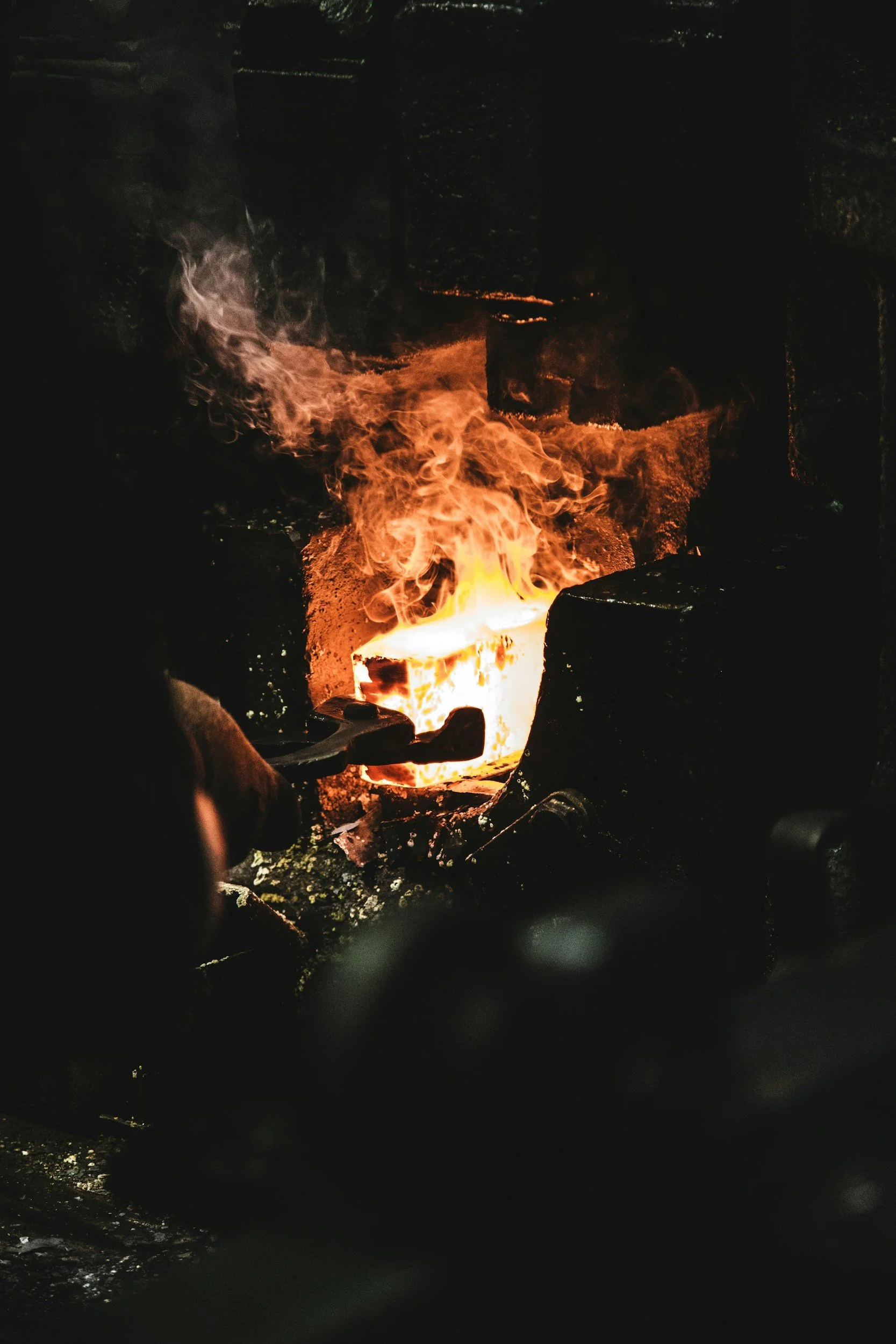
The Soul-Forge
With hammer-blows and searing fire
In a place that looked like Hell itself
The Master crafts some worthless iron
Shaping, purifying, honing
'Til the Work is brought out strong, purposeful, beautiful.
-
Through cruelty and adversity
In a place that felt like Hell itself
The inner-self broken through strife
Shaped, purified, honed
'Til in us is brought out beauty and purpose and strength.
Mike, April 2026